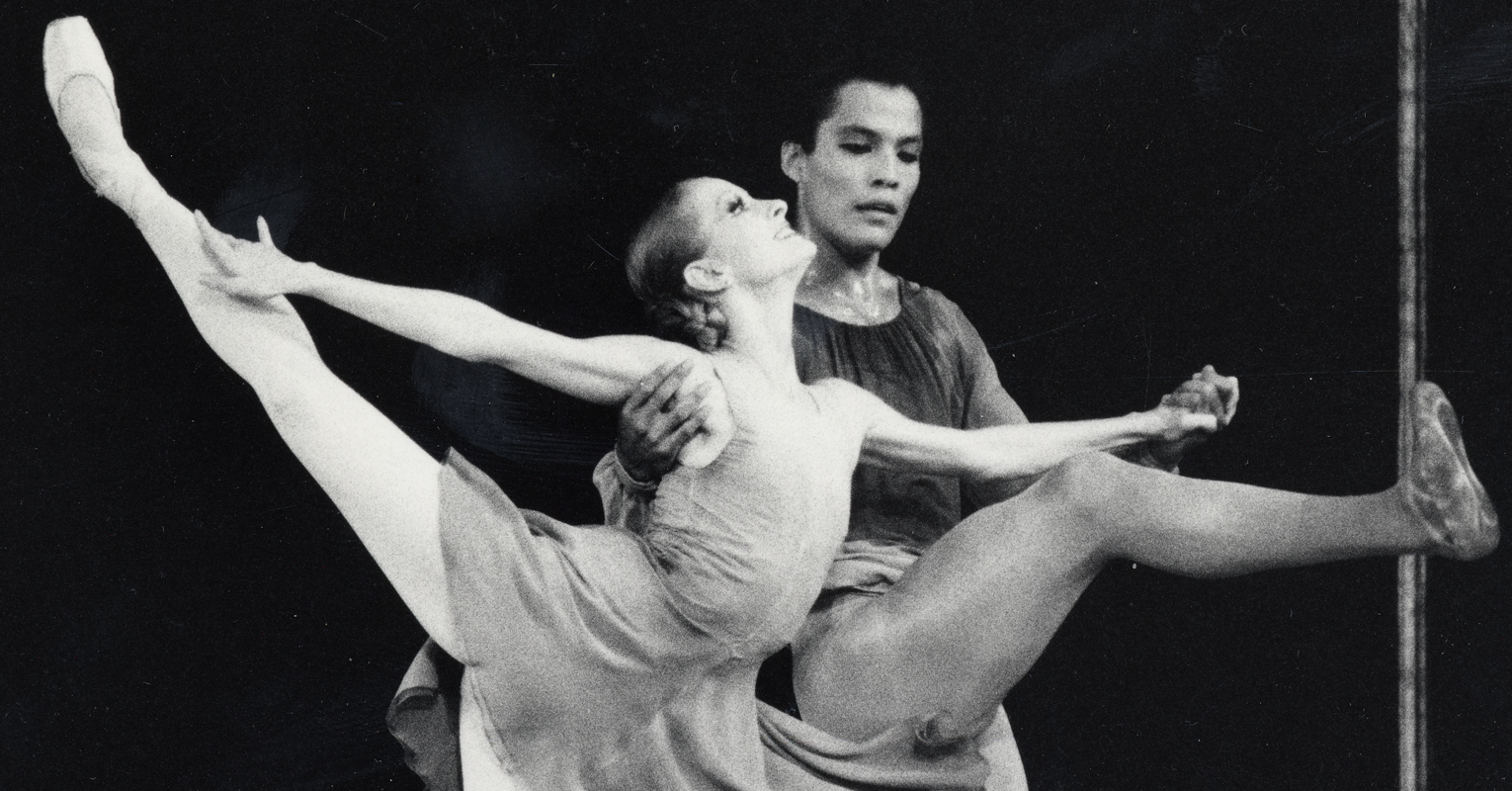
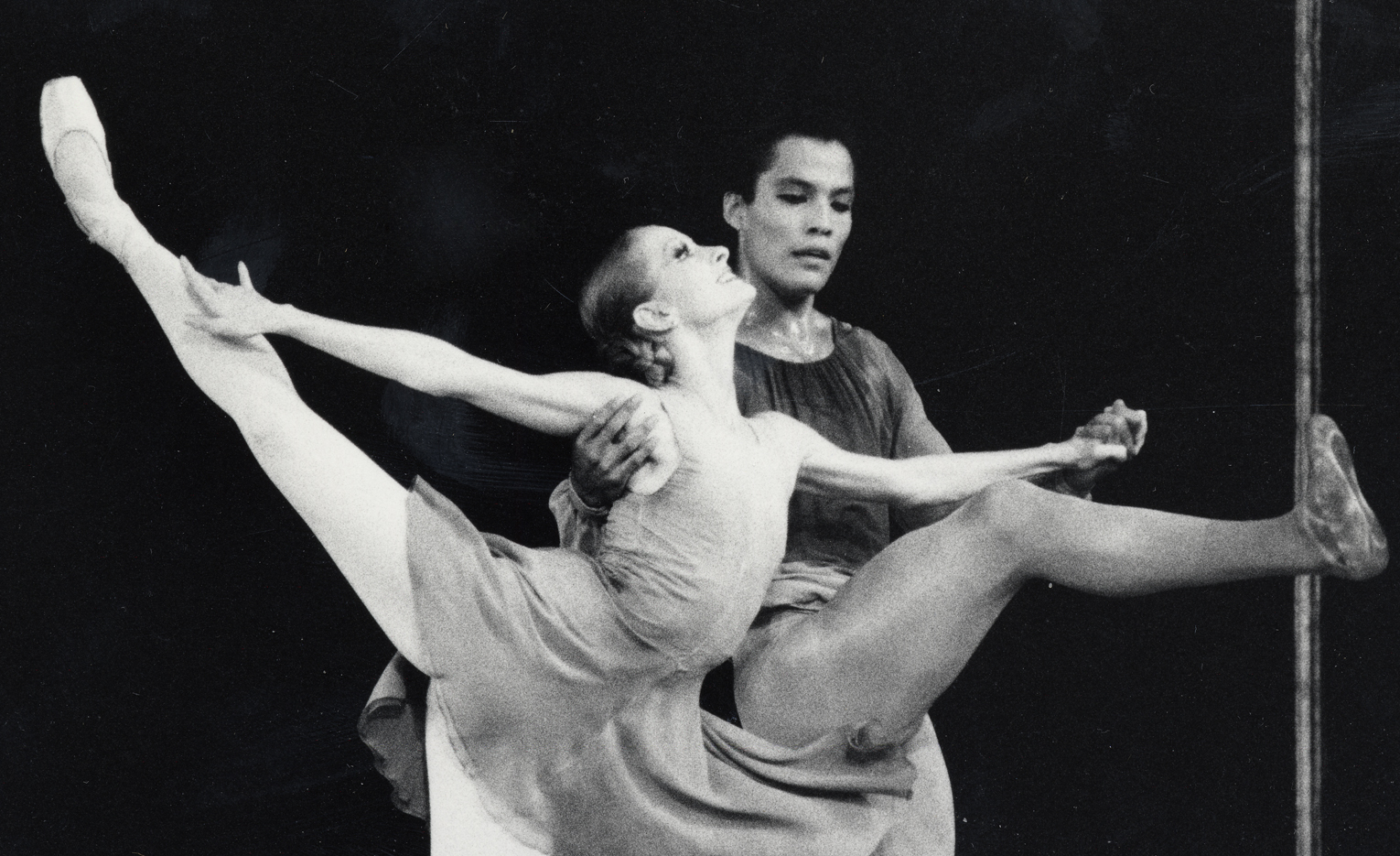
Brahms/Handel: Choreography by Jerome Robbins & Twyla Tharp
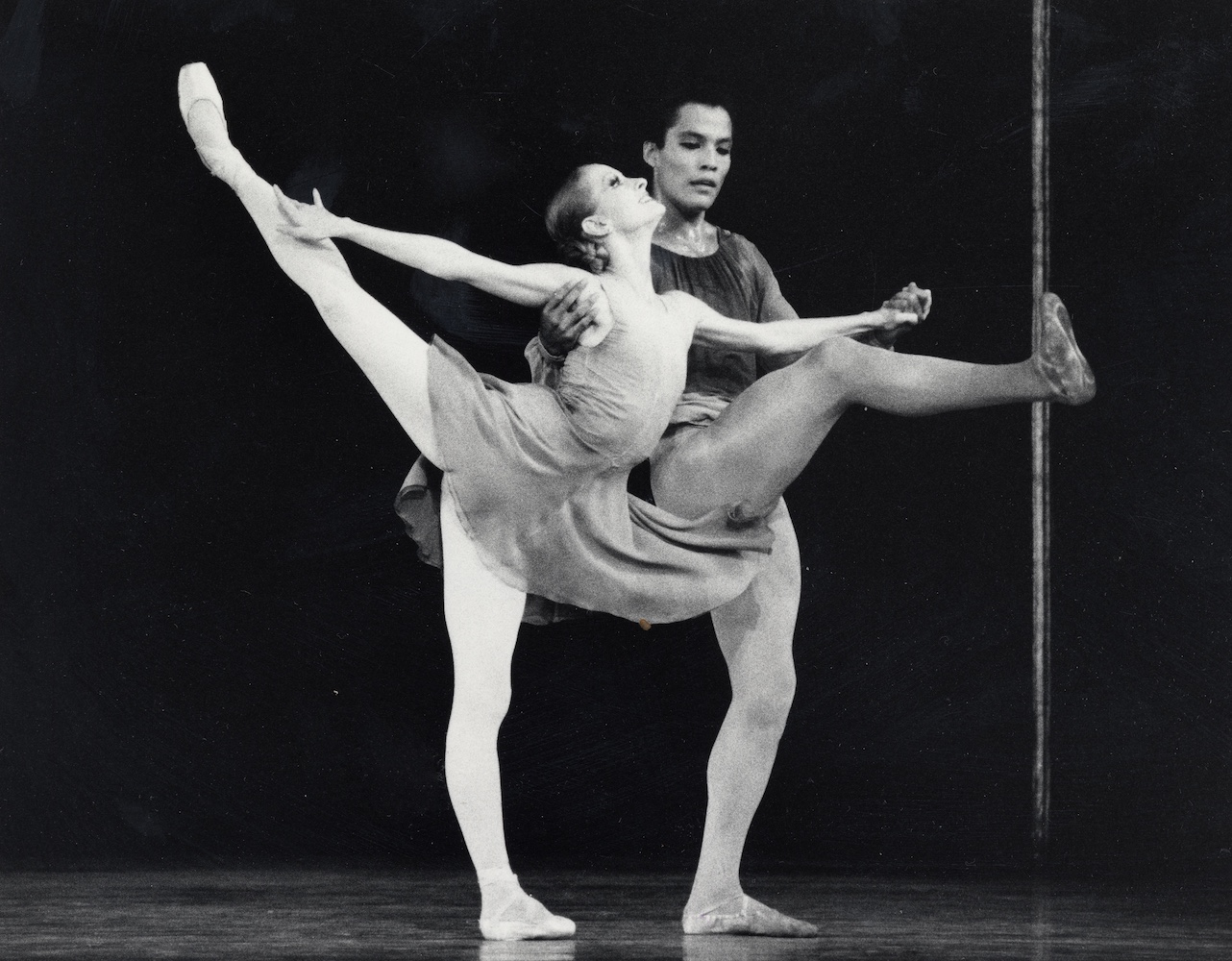
Calegari and De Soto in the 1988 revival. Photo by Paul Kolnik.
Cook and Calegari in studio rehearsal.
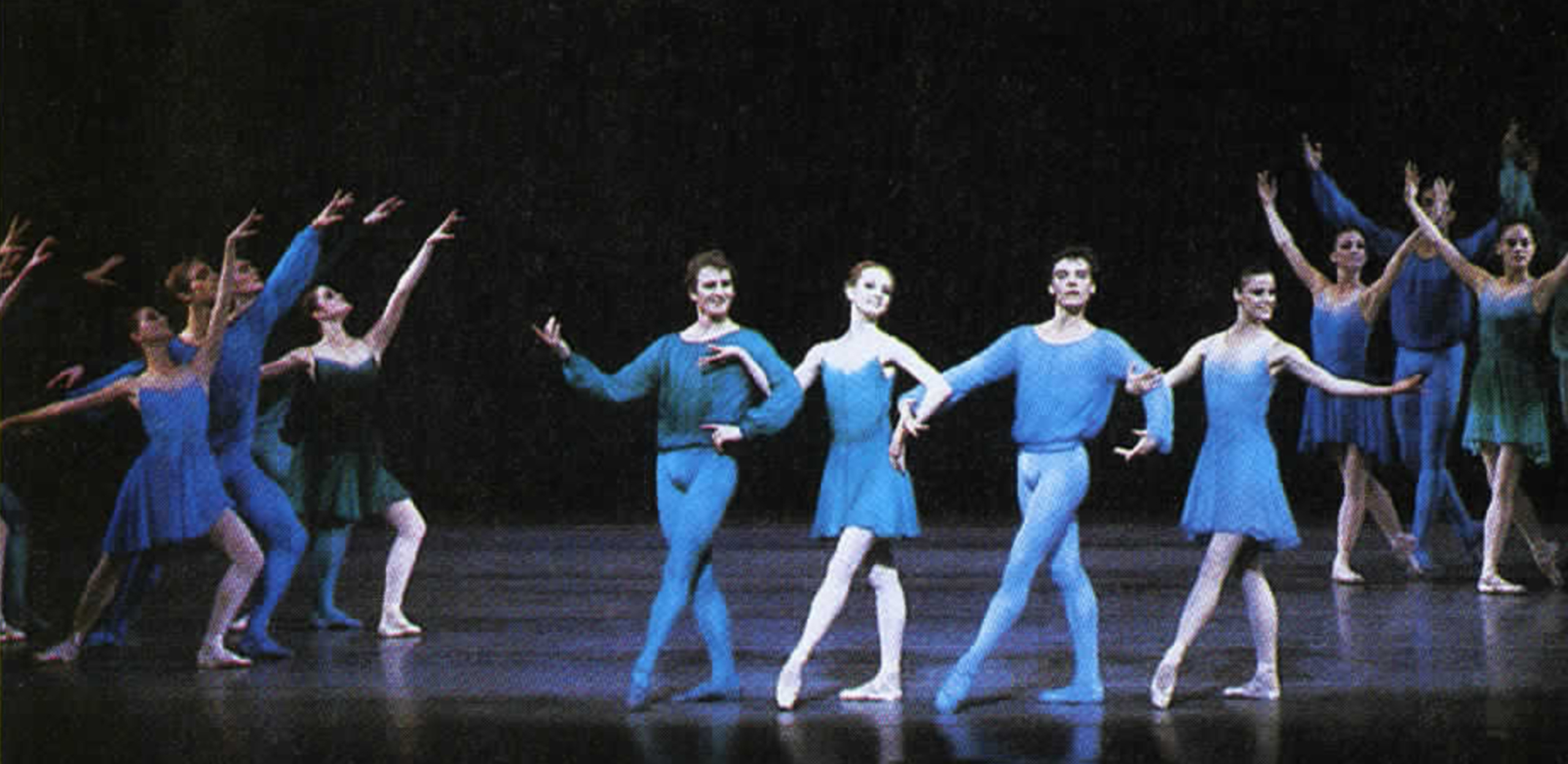
Cook, Calegari, Andersen and Ashley in performance.
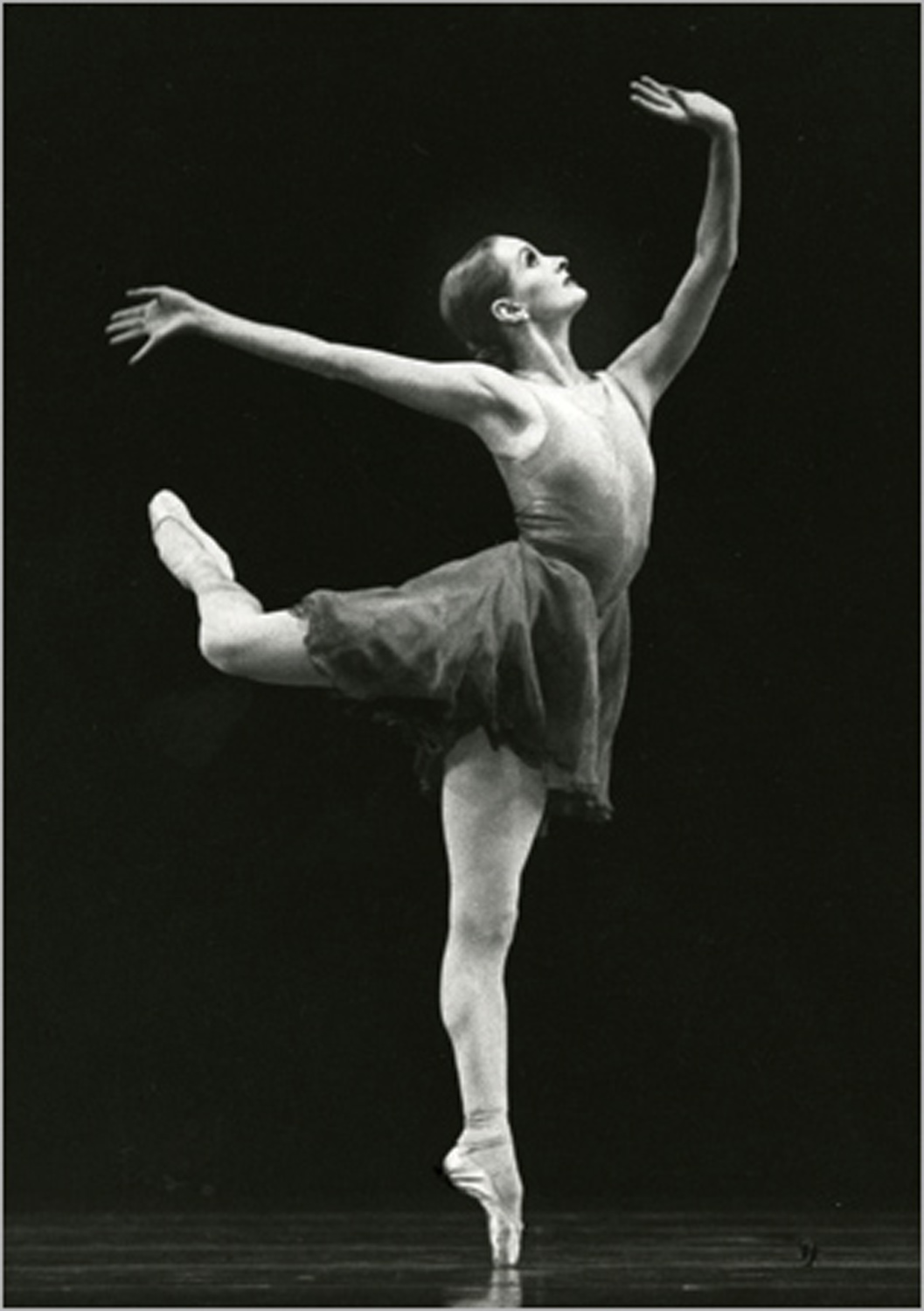
Calegari in performance. Photo by Paul Kolnik.
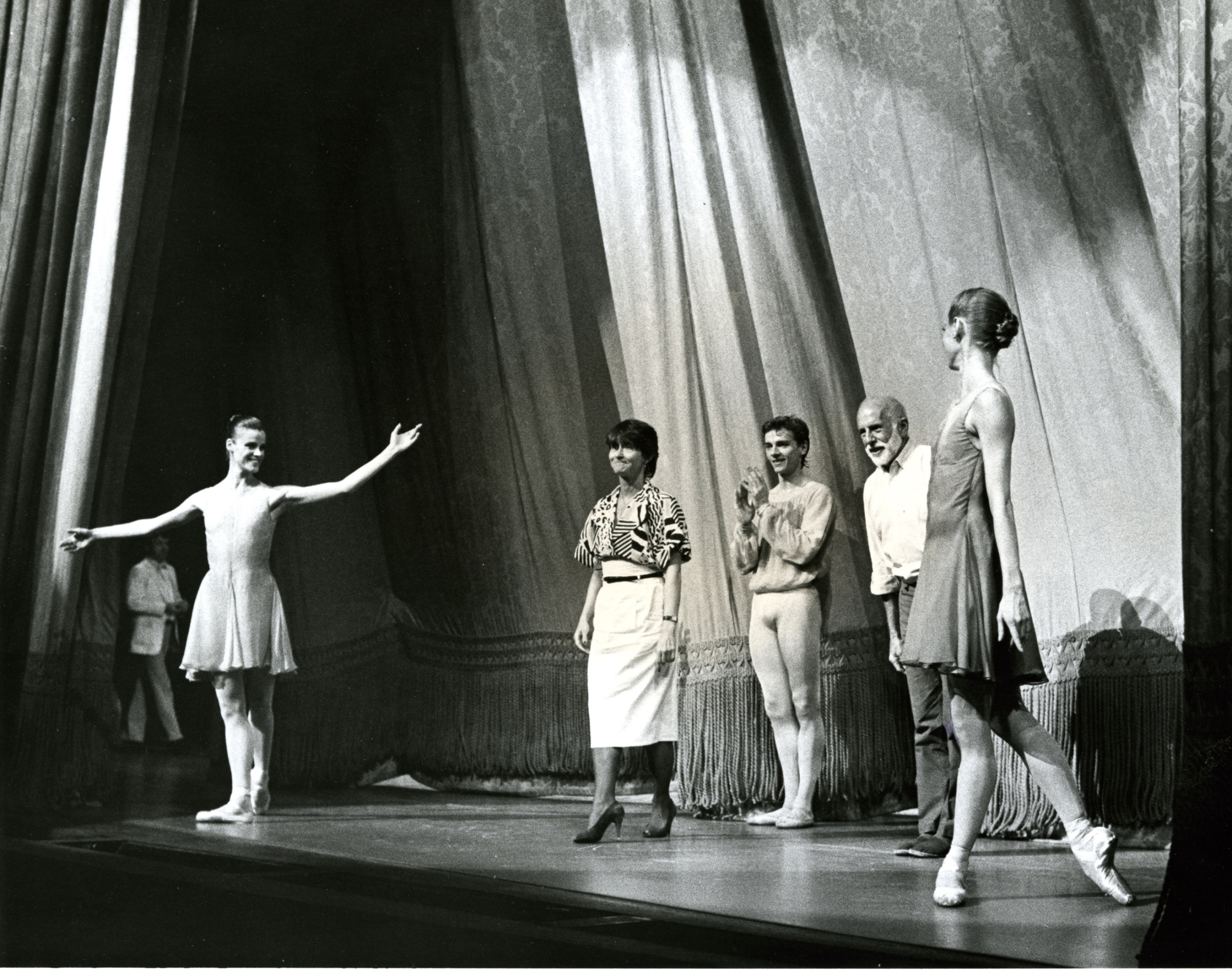
Ashley, Tharp, Andersen, Robbins and Calegari during a curtain call. Photo by Steven Caras.
Premiere
Production
-
Choreographers
Jerome Robbins and Twyla Tharp
-
Composer
Johannes Brahms (Variations and Fugue on a Theme by Handel, Op. 24, 1861)
-
Arranger
Edmund Rubbra
-
Live Music by
The New York City Ballet Orchestra
-
Lighting Designer
Jennifer Tipton
-
Costume Designer
Oscar de la Renta
Dancers
Principals
Merril Ashley, Maria Calegari
Ib Andersen, Bart Cook
Soloists
Stacy Caddell, Laurie Hauser, Alexia Hess, Rita Norona, Shawn Stevens
Peter Boal, Peter Frame, Kipling Houston, David Moore, Sean Savoye
Chorus
Stacy Calvert, Elizabeth Irwin, Margo Krody, Jerri Kumery, Catherine Oppenheimer, Simone Schumacher, Deborah Wingert
Paul Boos, Cornel Crabtree, Christopher Fleming, Paul Frame, Afshin Mofid, David Otto, William Otto
-
Number of Dancers
28
-
Runtime
00:27:25
Description
Jerome Robbins approached Tharp to collaborate on a new work for New York City Ballet in early 1983. Shortly before his death, George Balanchine suggested Tharp and Robbins select Johannes Brahms’ “Variations and Fugue on a Theme by Handel.” A set of 25 variations and a Fugue based on Handel’s “Harpsichord Suite No. 1 in B-flat minor, HWV 434”. They took his advice and began work on Brahms/Handel, a uniquely collaborative endeavor.
The two choreographers agreed that all the material they made was fair game: Robbins riffed on Tharp’s phrases; Tharp inverted Robbins’ steps. They created variations on each other’s variations, not just on the theme. The spacing and staging was also built collaboratively. Tharp might set her dancers upstage and Robbins would bring his cast onstage in the middle of the phrase to begin a new section.
In homage to Balanchine, Tharp and Robbins incorporated references to two of his ballets, Serenade (1935) and Bugaku (1962). “…[We] were all feeling pretty lost because Balanchine had just died,” Maria Calegari recalls, “[Brahms/Handel] was just a really, wonderfully inspiring experience – for myself particularly – because I found that there was a connecting thread between Balanchine’s work and Twyla’s work.”
From the original program: “In spite of the powerfully Romantic characteristics of his music, German composer Johannes Brahms (1833-1897) imposed a classical sense of order on his work, rejecting the use of free variation only tenuously connected to the theme. By taking as his models Bach’s Goldberg Variations and Beethoven’s technique of thematic modification, he came to realize that the type of variation Beethoven developed did not arise from clinging to the melody and rhythm of the theme, but from its transformation into something new, based on its phrase structure and harmony. For his Handel variations, Op. 24, Brahms chose a long fugue as a conclusion appropriate to his theme. Edmund Rubbra (b.1901) is an English composer, pianist, teacher, and writer. His orchestration is faithful to Brahms’ instrumental style.”
-
Commissioned by
Past Performances
New York City Ballet
Brahms/Handel (premiere) | New York City Ballet
New York State Theater
New York, NY
June 7 1984 Premiere
New York City Ballet
Brahms/Handel | New York City Ballet
New York State Theater
New York, NY
June 5 1990 Repertory
- 1984
- 1988
- 1990
- 2008